
About
Dr Steve Vinay Gunther
Forty years of curiosity about what it means to be human — gathered into a Gestalt practice, a teaching life, and a quietly stubborn faith in people's capacity to change.
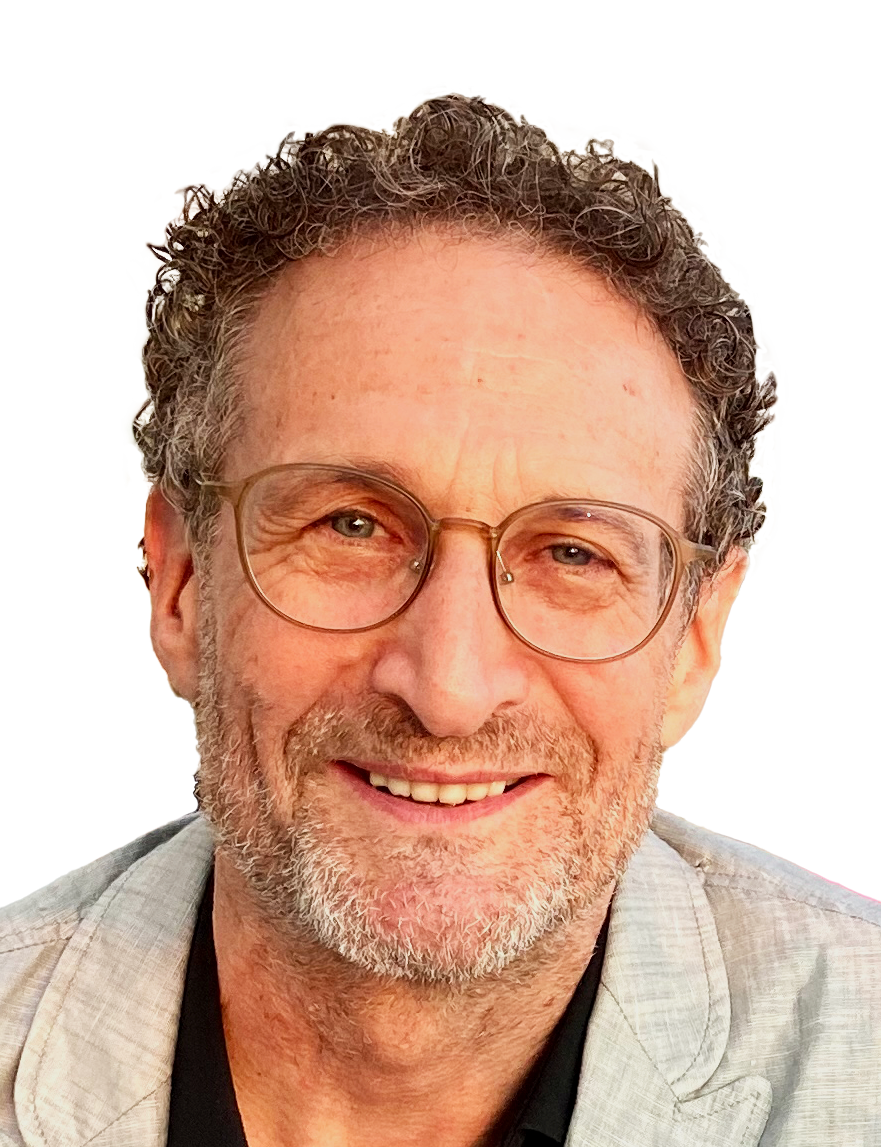
A short introduction
I’m a Gestalt therapist, supervisor, and teacher — and Lifeworks has been my practice home since 1987.
I’m 67, Australian, and I’ve spent most of my adult life sitting with people in the particular kind of attention that Gestalt therapy makes possible. The work spans individuals, couples, families, supervisees, and groups of practitioners in training. Some come for a season; some return across decades.
Alongside private practice I teach internationally, write, develop programs, and keep asking the questions that drew me to this field in the first place: how do we live more honestly, more connectedly, and with less wasted energy spent maintaining the parts of ourselves we’d rather not meet?
Background & training
A long lineage, deliberately chosen.
I came to psychotherapy through a wandering route — theatre and clowning, street performance, community activism, meditation, running small businesses (a vegetarian cafe, a sign-writing shop, a food cooperative). Each of those left a residue in how I work: an ear for the body, a tolerance for mess, a respect for what ordinary people know about their own lives.
Primary trainings
Gestalt therapy, family therapy, narrative therapy, Family Constellations, and Career Coaching — each studied to the point of clinical fluency rather than collected as credentials.
Complementary studies
NLP, somatic psychotherapy, and relational therapy. The body has always seemed to me at least as honest as the talking mind, and often a step ahead.
Qualifications
PhD · Masters of Mental Health · Diploma of Gestalt Therapy · Graduate Diploma of Social Ecology · Workplace Trainer Cat IV. Member of EAGT and AACC.
How I work
Gestalt, with the whole person in the room.
Gestalt is sometimes mistaken for a technique. For me it’s closer to a way of paying attention — to what is happening right now between us, to what the body is saying underneath the sentences, to the patterns that have become so familiar a person no longer notices they’re choosing them.
I tend to work experientially rather than diagnostically. We might slow a moment down, try something on, notice what the shoulders or the voice do when a particular memory arrives. The aim isn’t insight for its own sake; it’s a livelier relationship with yourself and with the people who matter to you.
If you’d like more about the method itself, there’s a longer piece on what Gestalt therapy actually is.
Decades of practice
Lifeworks, and what it grew into.
I opened the doors of Lifeworks in 1987. In the years since, the practice has held tens of thousands of sessions and quietly accumulated the kinds of patterns you only see after a long stretch of clinical hours.
Northern Rivers Gestalt Institute
I founded NRGI as a four-year postgraduate program and served as its director for seventeen years. The school achieved formal registration; I shaped its curriculum, supervised its trainees, and watched a generation of therapists grow up inside it.
Career Decision Coaching™
Over years of seeing clients stuck at career crossroads I developed a focused, single-session method that draws on Gestalt, narrative work, and vocational psychology — a way to find a real next step rather than a tidy list of options.
International teaching
The Lifeworks International Program.
I teach regularly in the United States, Mexico, China and Japan, and lead workshops across Europe and South-East Asia. One of my ongoing specialisations is the meeting place between psychotherapy and spirituality — a topic I carried into my role as Director of Spiritual Psychology at Ryokan College in Los Angeles.
Teaching has always been the other half of practice for me. It keeps the questions fresh, and it pushes me to articulate what I think I know so other clinicians can argue with it.
Recurring teaching themes
- · Gestalt method & advanced practice
- · Spirituality and psychotherapy
- · Constellations and systemic work
- · Power: awareness, ethics, skilful use
- · The “unvirtues” — shadow material in the consulting room
Writing
Books, articles, case-study blogs.
I’ve written a book for men called Understanding The Woman In Your Life — A Man’s Guide to a Happy Relationship, plus a longer-running stream of articles, case studies, and short essays on Gestalt practice. Since 2010 I’ve maintained a series of case-study blogs in close to twenty languages, so that the method travels into communities that don’t always have local training available.
Doctoral work
On the interpersonal dimensions of power.
My doctoral thesis takes up a thread that’s run through my practice for years: how power moves between people — between therapist and client, parent and child, teacher and student, colleague and colleague. Most of what goes wrong in relationships, in my experience, has something to do with power that has been denied, mishandled, or quietly grabbed at. I’m interested in what it looks like to wield it well, and so have started a podcast with Dr Paul Donovan.
Personally
Outside the consulting room.
I have five grown children and five grandchildren — most of what I think I know about systems, attachment, and the long arc of human change has been tested first at home. I’m fascinated by systems theory and cybernetics, by meditation, by the way communities organise themselves, and by the small craft of running a workshop so that the room itself becomes part of the work.
After four decades I still find this work genuinely satisfying. Sitting with someone as they move from stuckness toward self-knowledge, or watching a trainee finally find their own voice as a therapist — those moments haven’t lost their shine.
Get in touch
If something here resonates, write to me.
Whether you’re considering personal work, supervision, or wondering about training — a short message is the simplest place to start. I read everything that comes in.